
Keep The Faith
Punk, ballet and rock-n-roll: a look into the beautiful mind of the Russian fashion designer Polina Mircheva

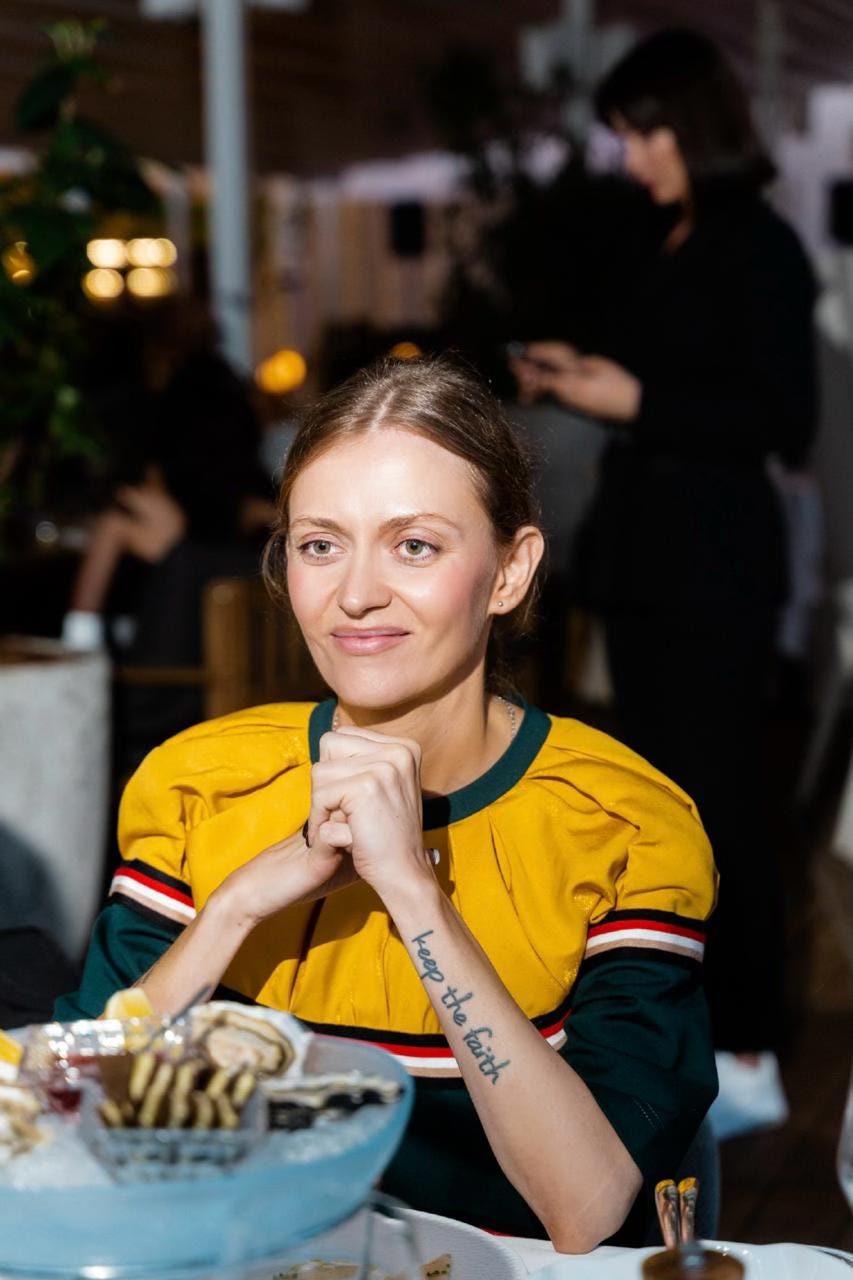
I’m looking at a picture of a young woman. In it she wears a smile, a burnt-yellow and dark-green top, perfect subtle makeup, her hair is parted and gathered at the back. A tattoo faces out on her left forearm. “Keep the faith”, it says.
— “Keep the faith” are the words from a Bon Jovi song, and I had them tattooed at a testing time in my life. I always had this feeling that I’m meant to have my own path, so I kept looking for it everywhere. From my 17 to my 27 I changed job after job after job, the work experience on my CV is pages long, it’s gigantic. The search seemed to me never-ending and very often fruitless. “Keep the faith” is a visual reminder for me to never give up, it’s about me having faith in myself. When everything gets too much and I think I can’t take it anymore, it helps to look down and see the answer is permanently there: have trust in yourself, keep the faith.
The woman with the tattoo is Polina Mircheva and she is a fashion designer. Her name is on her clothing label, and in place of “O” in “Polina” there sits a full-length red rose. It doesn’t look tacky or Disney, it looks very rock-n-roll, the sort of rose you’d find in the wild, or in a biker’s leather jacket pocket.
— Here is a little magic. I knew there was something out there for me that I would be able to do very well, possibly even without a degree or special training, but what that was wasn’t very obvious to me, I had to find it first.
— My childhood friend recently found this school-friends questionnaire with my answers in it too. It looks like in primary school I wanted to be a lawyer. But I also wanted to be a star, my sister and I used to play stars all the time.
— At my parents’ suggestion I studied tourism. When I was 22, I thought I wanted to be an hotelier. I put in a lot of effort into that dream, or what I thought should be my dream. I wrote business plans in English, traveled to Europe to view potential hotels for sale, had serious negotiations with serious people. I even calculated the cost of bar napkins for my future hotel.
— You don’t have to dress up, but tell me, why on earth not if you can? I always dressed up, often just because, and at some point friends and strangers alike started asking me about what I had on, they wanted to buy the clothes I was wearing off me. Gradually that got me thinking: can I be the one to tell people what to wear? Can fashion be my path?
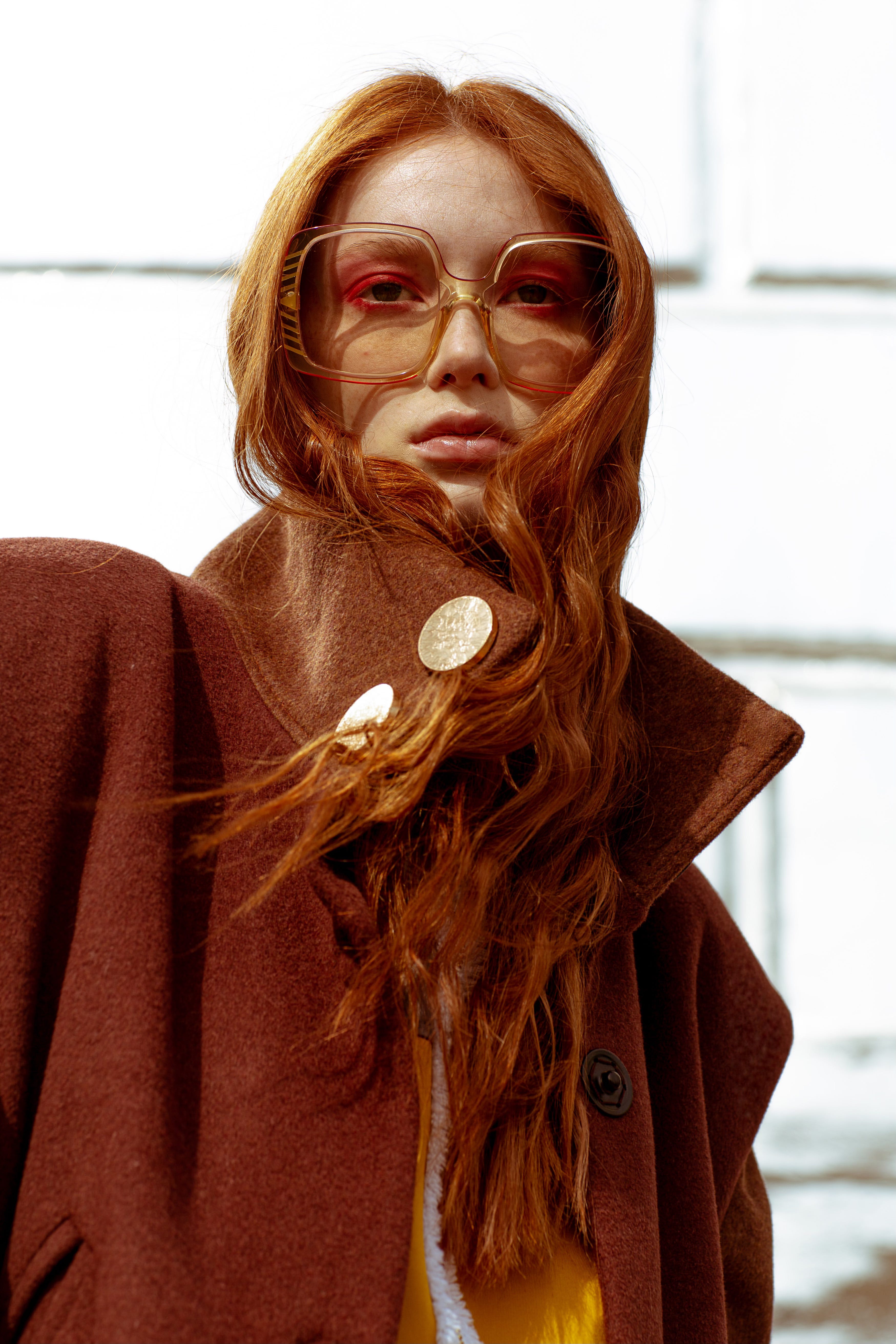
Polina Mircheva doesn’t want to make clothes that tell nothing about who wears them — she’s simply not interested in clothes whose only purpose is to cover the body. Hearing this I’m instantly reminded of what Martin Margiela (a legendary fashion designer from Belgium) once said of clothing, that it’s “the final layer”. To me it’s most certainly the final layer to style.
Style is never about a look on repeat or a recurrent colour palette, style is an ongoing life-deep collection of smells, gestures, sounds and memories that make up a person, and clothing is the continuation of that knowledge of who you are and more importantly the willingness to discover who you can be as you move through life. You can train your eye like you can train a muscle, but you gotta be willing to take risks and tell your story. That’s the difference between a sense of style that is subcutaneous, is in your blood, and someone’s ability to just dress well.
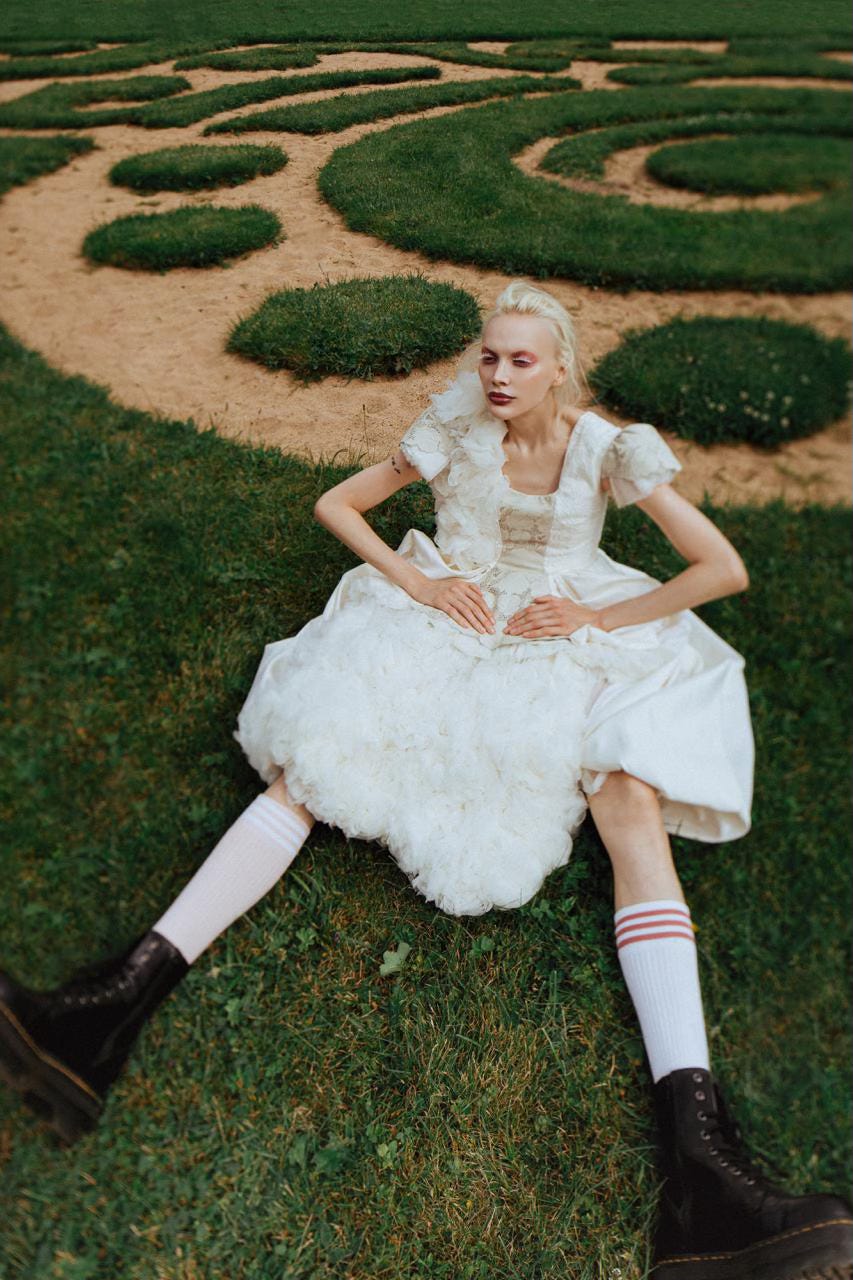
Glossy leather, silk and tulle, and lots and lots of handiwork…Polina Mircheva’s dress can be punk- and rock-forward as much as it can be big on ballet, and in her custom line Punk Couture it often is both.
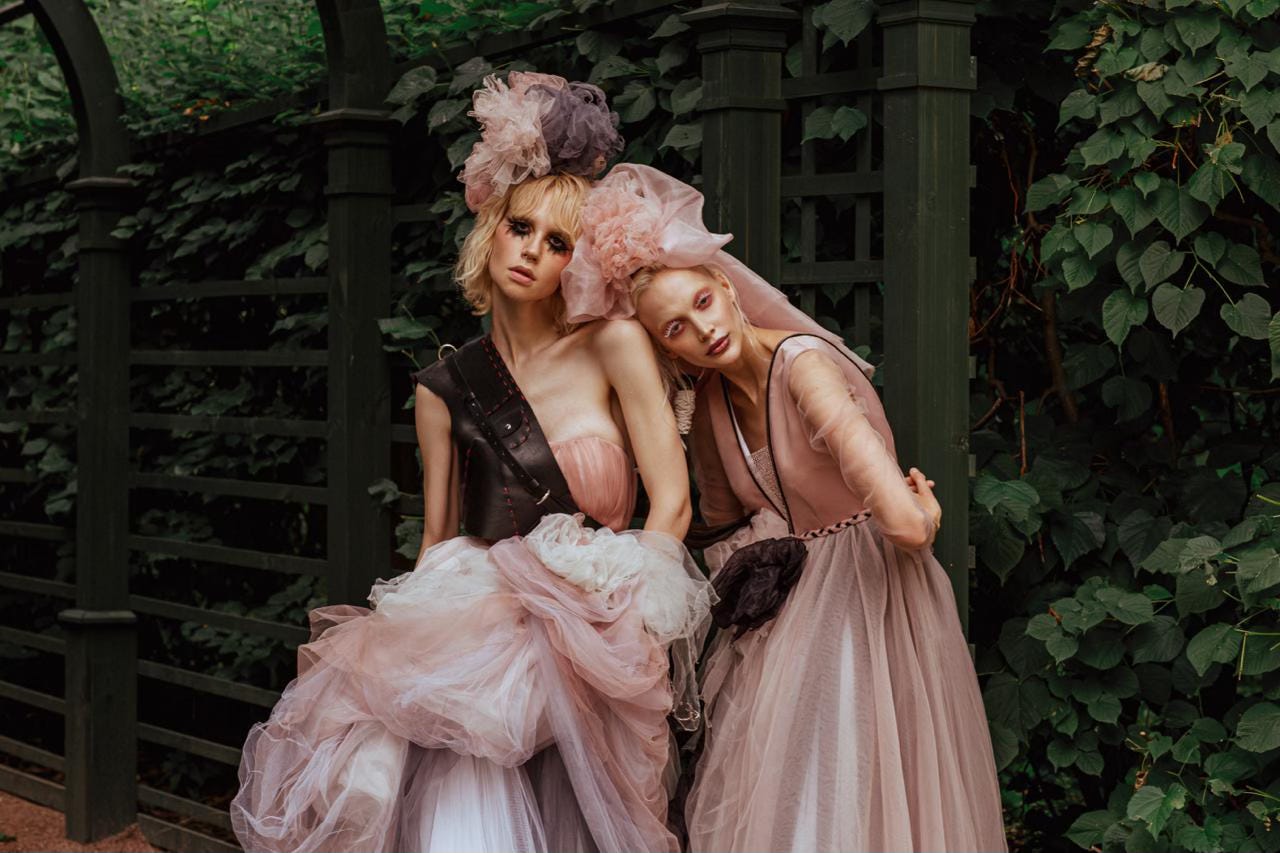
— Punk Couture is me 100%. These are my ideas about the supple femininity and the firm uncompromising character. They are also about my own steely character. Looking at me you wouldn’t say I’ve got balls of steel, but I do, they are a part of my configuration [smiles softly but firmly].
— My interest in punk style was planted in high school. Of course it started with a boy. I had a crush on this boy who was older than me. He always wore a studded leather jacket and leather pants, all leather look, like a metalhead. But his delicate face and soft brown eyes and longest lashes were such a contrast to his clothes that it really stood out for me, that duality of soft and brutal. He was also very kind, which emphasised the contrast even more. It really left an impression on me.
(I myself had a crush on a boy in my high school, he was into rap music. Obviously I listened to a lot of rap, and once showed up in what I thought was a rapper look: jeans, untucked white button-up (my father’s) long enough to fully cover the hip area, a black tie (groundbreaking!), and a cap backwards. I walked down the school hall, threw my hands in the air and shouted ‘Rap is Bread’ in Russian when the boy was in my vicinity; thank god my friend at the time partook in the madness and I wasn’t alone doing all that.)
There is a big reason why Polina often references ballet in her designs, and with so much reverence. She is a descendant of Sergei Pavlovich Diaghilev, a Russian art critic, patron and founder of the Ballet Russes (considered the most influential ballet company of the 20th century). She is his granddaughter 5 times removed.
— When I design, I pour out into clothes the dreams and fantasies I have about ballet, they are in my DNA. My innate gravitation towards grandiose silhouettes, rich colour and fabrics, all very common for ballet, I’m sure I got it from the great Sergey Pavlovich.
— As a descendant of such great public figure, do you feel the responsibility to have to be great as well? I ask.
— You nailed it, because that’s exactly what I feel — that responsibility. It’s probably bad taste to so openly admit to it, not so humble they’d say. But he passed it down onto me through the century, that unending strive to be uncommon, to rise above the mediocre, that restlessness you feel when you want to blaze a trail. The feeling doesn’t help me day to day, I’d even say it rocks the boat more than it doesn’t. But I feel him in my DNA, I really do.
— What does it mean to you to be Russian?
— I’m happy I can call myself Russian. Yes, we complain a lot, yes, we are cynical, but there is a lot of depth to us, we are soulful. To be ashamed to be Russian and to publicly say so is to be completely out of touch with your own identity.
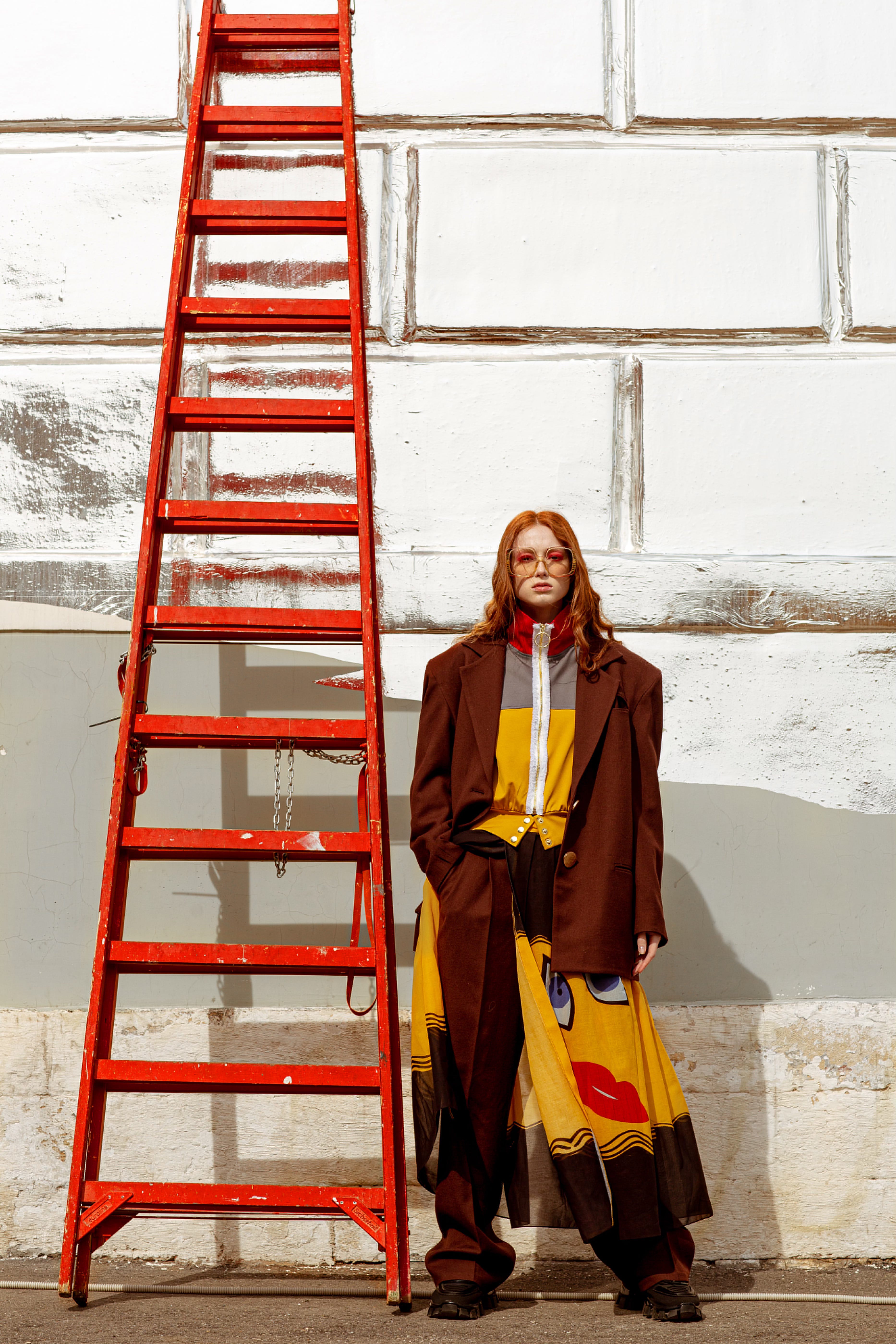
In a ready-to-wear line, Urban Vogue, Polina continues to play up contrasts and good friction. In 2019 a spring collection titled “Nebroskaya” (Unnoticeable) was released. Of course it was everything but and the lookbook divided the public opinion. Some styling suggestions were too new and brash for consumer’s taste — way too many people were terrified to find skirts styled over pants, or who wouldn't get the layering ideas, or the suggestions to combine the sporty with the classic; vile and hateful comments ensued. Thankfully those who weren’t terrified were instantly enamoured with the clothes and propositions; Polina’s outreach grew; her socials got hacked (allegedly by 2 young women).
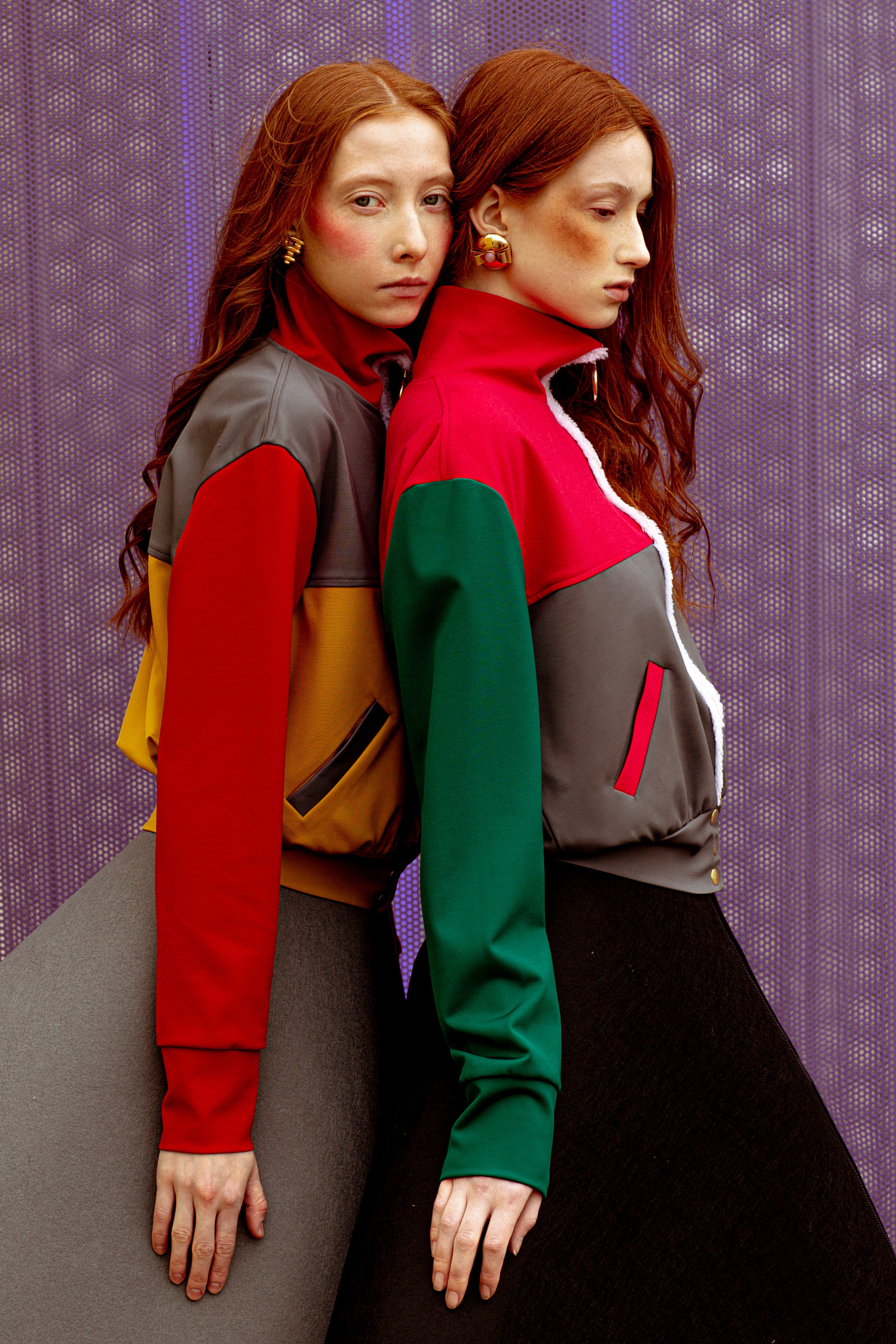
— I love Moscow, I live and create here, but we are hardly a fashion capital. I’d love to present at Paris Fashion Week, this is my dream. I feel my clothes will be more understood there. Here I am the black sheep. You have to explain your collections to editors and media a lot, if we are lucky to actually have somebody from press interested, most of the time our press releases remain ignored and unanswered. There is a limit to what we can show here, and we are capable of so much more.
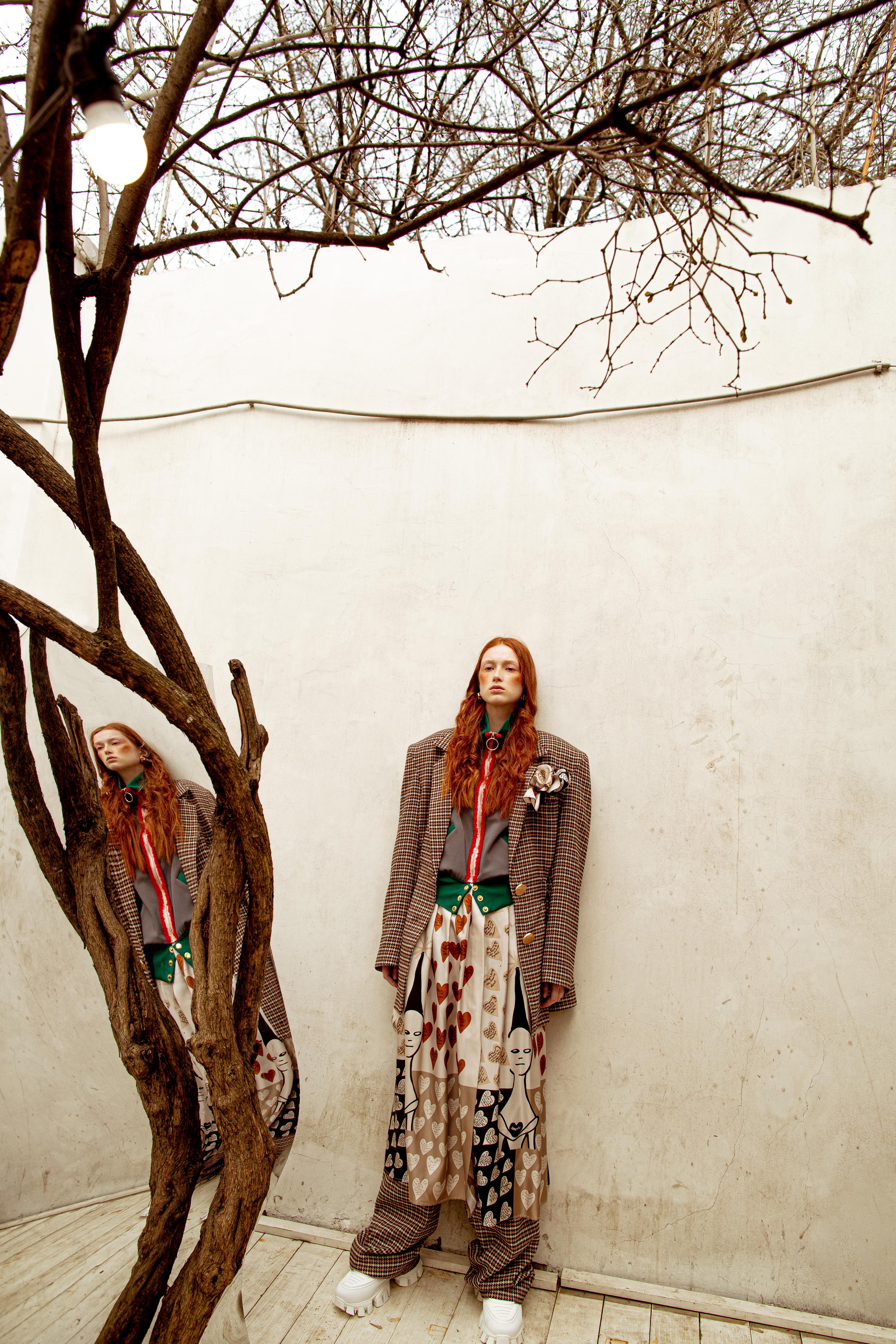
You’ll find it wholesome to know that Polina Mircheva’s team is her family. Not in any metaphorical way, it’s literally her family. Her mother is a co-creative director; the brother oversees everything that has to do with the suppliers and partnerships, and does all the administrative support; the father’s tasks are the finances and legal advice. It’s a family business.
— 80% of my work isn’t about creativity at all, it’s running a business and it’s the autopilot mode. So when it comes time to do the other 20% which is about creativity, I must switch off the autopilot. That’s unnerving, because you suddenly can’t fall back on your routine and that feels like a free fall. Before I start something new, I somehow become so ‘heavy’, and I procrastinate a lot too.
— It’s not a given that everything I create sees the light of day, on average less than half of it does, so when things go well, when things flow, I feel very inspired. On the contrary, when a collection bombs or a negative review comes in, or there is a disruption in our supply chain, or all of that at once, I can be found flat motionless on my coach for days on end, wrought by self-doubt again.
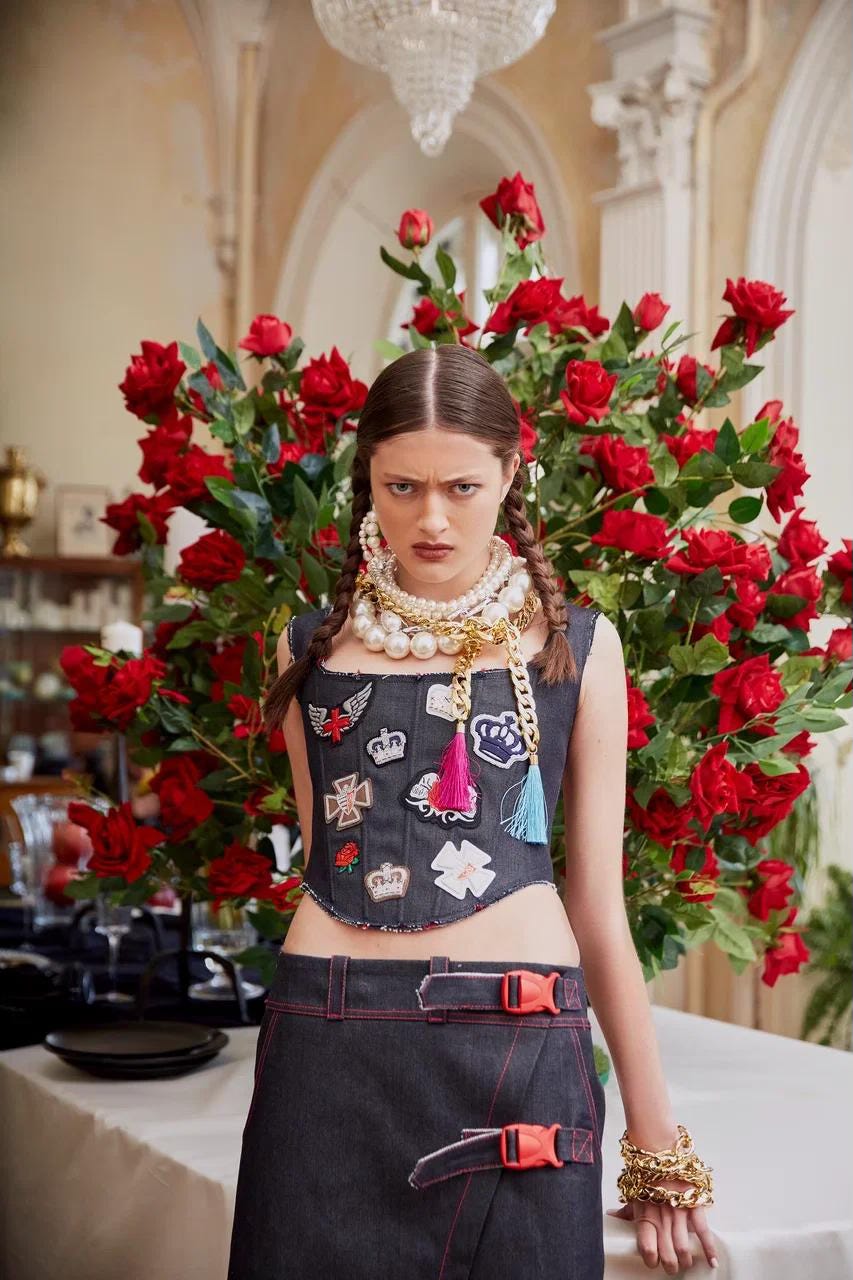
— Like any decent human being, I snap at my loved ones in such times [laughs]. The other side of my open nature is that I fold easily when something goes wrong, take everything to heart, start thinking, This is it, my life is over. Of course these are the moments when i’m supposed to ease my control grip and trust the flow and give in, but none of it comes easy for me.
Polina’s biggest prerequisite for creativity is music. It’s her biggest inspiration.
— I’m sure when my mother was in labour with me, Scorpions must have been playing in the background, because i’m a music fan through and through, to the bones. When I was small I watched the music channels MTV and VH1 like other kids my age were watching cartoons.
— I let the music I listen to and love come through in my clothes. I think music is mankind’s best and most important invention. Melody in music is what matters to me, it inspires me like nothing else can. Bon Jovy’s got melody, and Eminem, and Limp Bizkit, and even Guano Apes and AC/DC got melody. Sadly there is no lasting melody in music these days, it all but vanished.
— Why do you think that is?
— Everyone’s in a hurry. We don’t pause to think things over anymore, we want everything easy and ‘digestible’ and on the go — one-day music, one-day fashion, one-day art.
“Art is how we decorate space, music is how we decorate time.”
Jean-Michel Basquiat
Fashion for Polina is an art form. That and a designer’s intellect.
— I love fashion, well, for fashion. The drama, the theatre, the dream in the dress. Some designers make dresses that are nothing short of paintings, like John Galliano, or Alexander McQueen when he was alive (the true alien on Earth if you ask me, nobody will ever cap his visions). Or the sophistication the colour black receives when Ann Demeulemeester works with it, she makes it so multi-tiered and sensual in her designs.
— Is there a celebrity you’d love to dress?
— Oh I’d love to dress Beyoncé for her tours! What she wears on stage is what a Polina Mircheva girl can wear in life: a sporty style with a strong boudoir energy — strong shoulders, structured sleeves, wide brim hats and a shimmering bodysuit. Inasmuch as some have the absolute hearing, Beyoncé has got the absolute feeling for rhythm, the way she moves to the music is unparalleled. I feel I’m able to create major stage outfits for her, major! We tried to get in touch with her stylists, so far no response yet, so far…
Let’s root for Polina!
There is an expression in Russian, vyiti iz pod’yezda. It means “to leave one’s apartment” or “to exit one’s apartment building”, but these are only literal interpretations. For any Russian vyiti iz pod’yezda is a concept, especially if it’s a female. My guess is that it probably began with the rise of khrushchevkas, the 3- to 5-storied apartment buildings developed in the 1960s under Nikita Khrushchev. The apartments were matchbox-sized, the walls thin, the residents plenty. Basically, gossiping was a given.
It always started with a bunch of grandmas, babushkas, who in various numbers depending on the time of day occupied the seating benches (like those in a park) that flanked each entrance (pod’yezd). They were the jury of one’s morals and taste. “Look at her, vyshla iz pod’yezda” usually meant that a woman walking out of the building looked indiscreet, which actually meant she looked coifed and well dressed, and everybody on the benches by the entrance liked to speculate what she may be up to. In modern days vyiti iz pod’yezda is simply to step outside in style, and Polina’s designs are here for it.
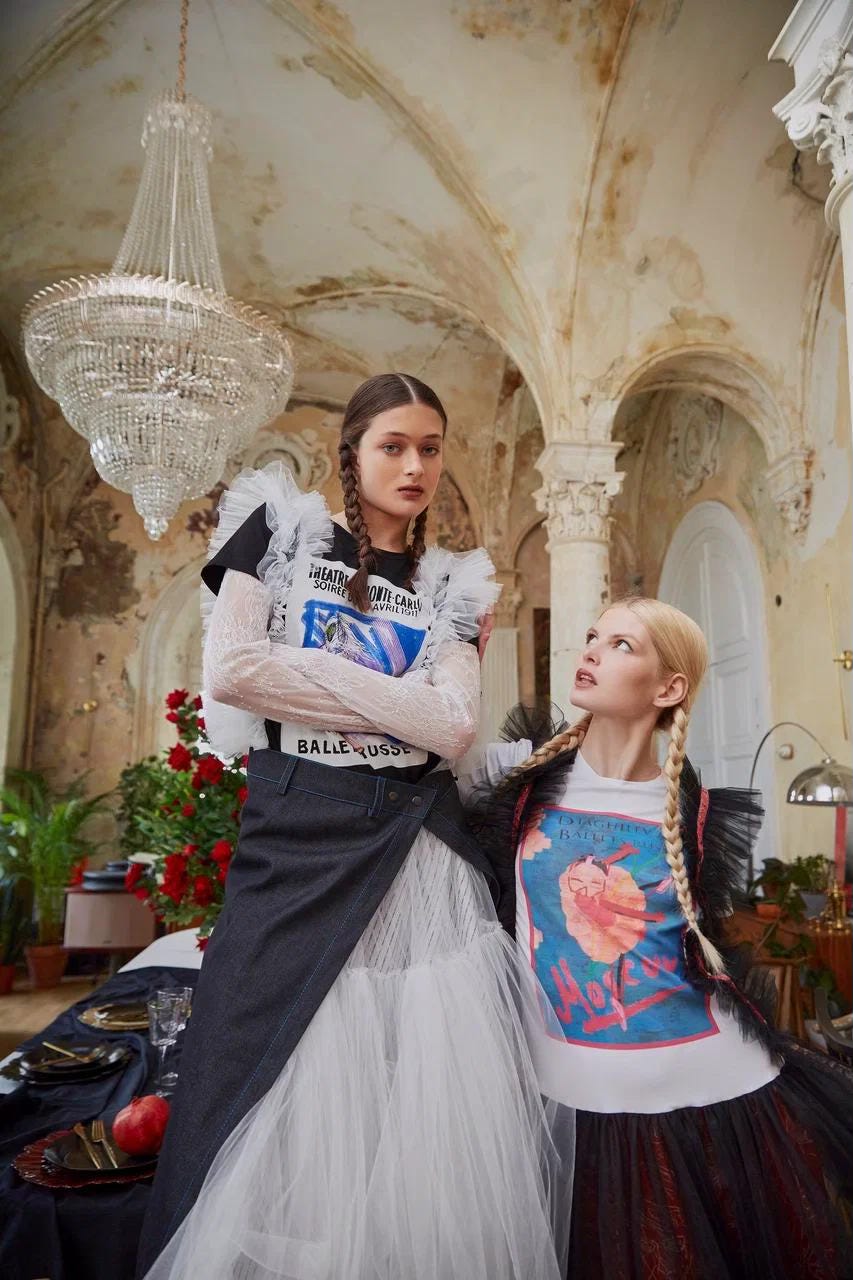
— Here is my suggestion on how to effectively vyiti iz pod’yezda for anybody: match the unmatchable. Tasteful kitsch always works. “Everything and the kitchen sink” in the right dosage, that is. But please don’t do the 50 shades of leopard print together with some stripes or polka dots together with some acidic colours, for ‘good’ measure.
— Could anyone even pull that off? We both laugh.
— When I dress up I don’t immediately start with clothes, actually. I start with hair and make-up, maybe nails as well. I get that done first, a beauty look, then I check myself in the mirror, get inspired by what I see, and then go with the flow and pick the clothes that match my vibe.
— Do you have a piece in your wardrobe you’ll never part with?
— The Row leather jacket, it’s very expensive, but I just love the quality of it. The more I wear it, the more beautiful the leather gets, it’s worth it.
— That sounds luxurious. What is luxury to you?
— Luxury to me is to be my authentic self and riding in a beautiful car and wearing a Swiss wristwatch; make clothes that are the extension of my soul; be dressed in such clothes; and be surrounded by my loved ones. That’s luxury to me. Money doesn’t spoil anyone who knows who and what they are, especially if you make that money yourself.
Mic drop!
(All photographs in this story are courtesy of Polina Mircheva)