
When Glass Sings
Multimedia artist Anna Priakhina on experiment, jewellery, and the moment an object enters the world

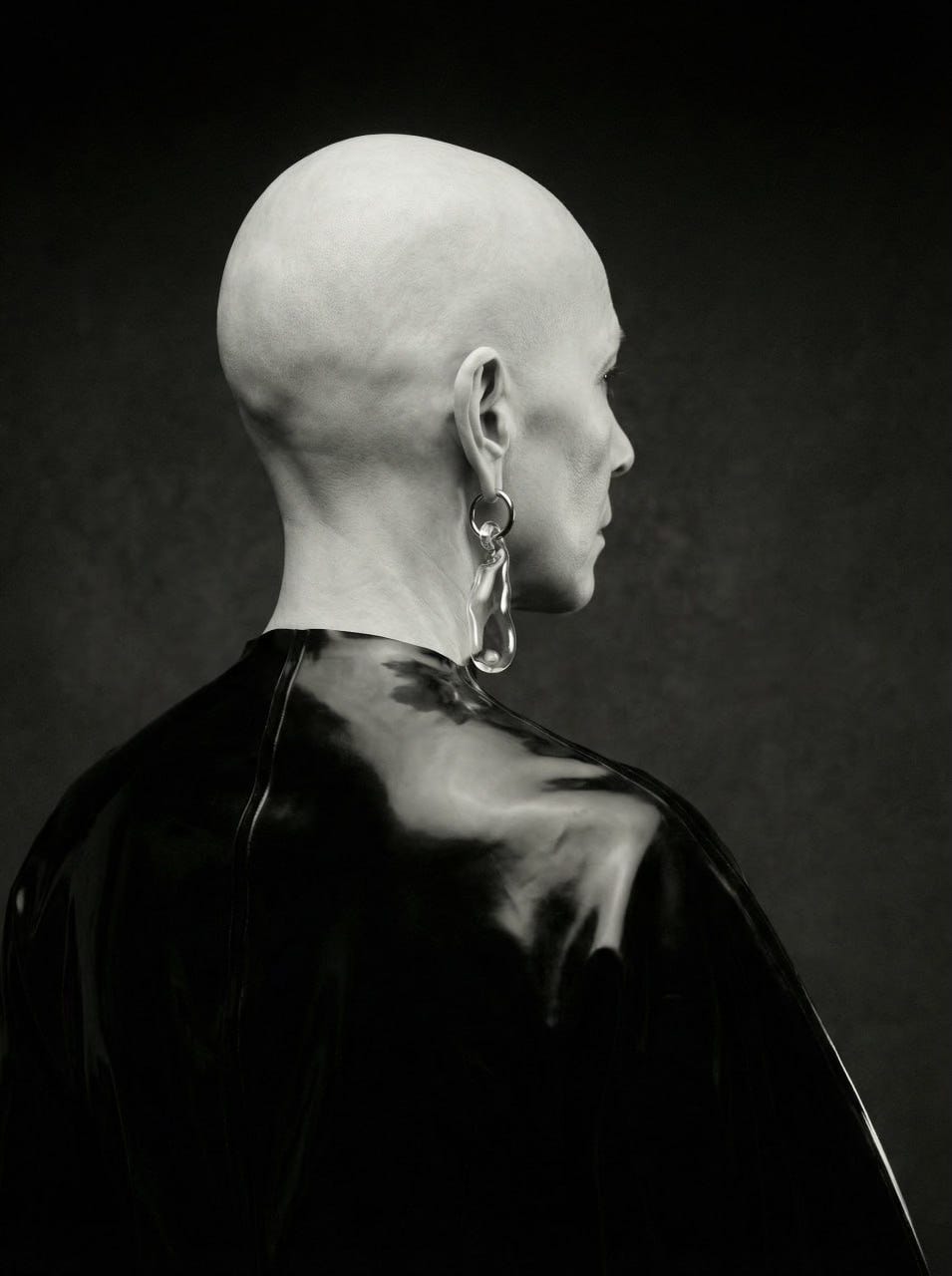
When Anna Priakhina speaks about jewellery, ornament is not the central question. A piece may begin in glass and heat, but it comes fully into being only when someone picks it up — and cannot quite let it go. What matters is not only the object itself, but what happens between it and the person who wears it.
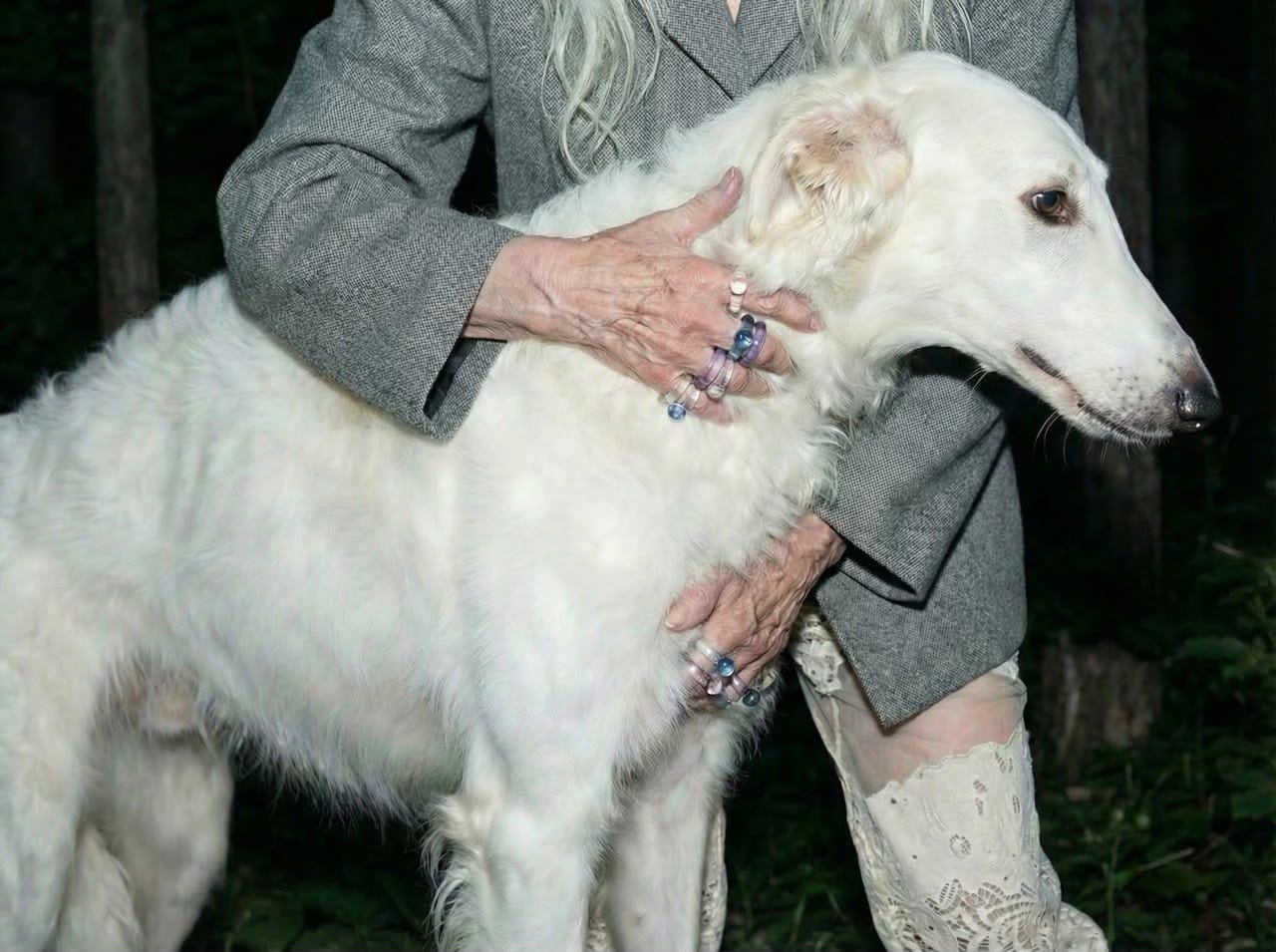
What happens then is often a kind of love. Some say immediately, “That’s it, I’m taking this with me.” Others touch a piece first and return later to buy it, saying, “I’ve been thinking about that ring this whole time.” Love — and a little bit of fear. Because a ring like that changes the way you behave. You don’t toss it onto a table; you return it carefully to its box. It’s like having a pet. It asks something of you.
Jewellery like this also gives something back — a new experience. And it has a beautiful sound. People who wear Anna’s earrings say they can hear them softly ringing, like crystal at a wedding table. The rings can chime as well.
— If someone receives my jewellery accidentally — as a gift, for example — it can be nice, of course. But the person didn’t choose it themselves. They may not understand what it requires or know how to care for it. And then nothing really happens between them. The piece remains without attention, without love.
You describe your practice as an experiment on the path toward art. At what moment do you feel that the experiment has succeeded: when a result is found, or when something changes within you?
— For me, an experiment is about process — about searching. If I create something, arrive somewhere new, gain knowledge or experience, then everything is unfolding as it should.
That search didn’t begin with jewellery at all. In fact, Anna’s brand itself — ANNA PRIAKHINA — grew out of that exploration. Her original intention was to study glass as a material for creating art objects. Too often, while looking for workshops where she could learn professional glassmaking techniques, the answer was the same: sorry, prior technical experience is required.
— And my response was: if you think I won’t reach that level, then this isn’t the right place for me.
Eventually she found places willing to teach her. In that moment she didn’t yet imagine that jewellery would become her medium.
— If you want to arrive at something big, you have to begin with something small. I started by making my first pieces — simple jewellery, though even then I was already working in my own style.
Her very first ring was a giant flower with five large transparent petals — the piece that soon appeared on the runway.
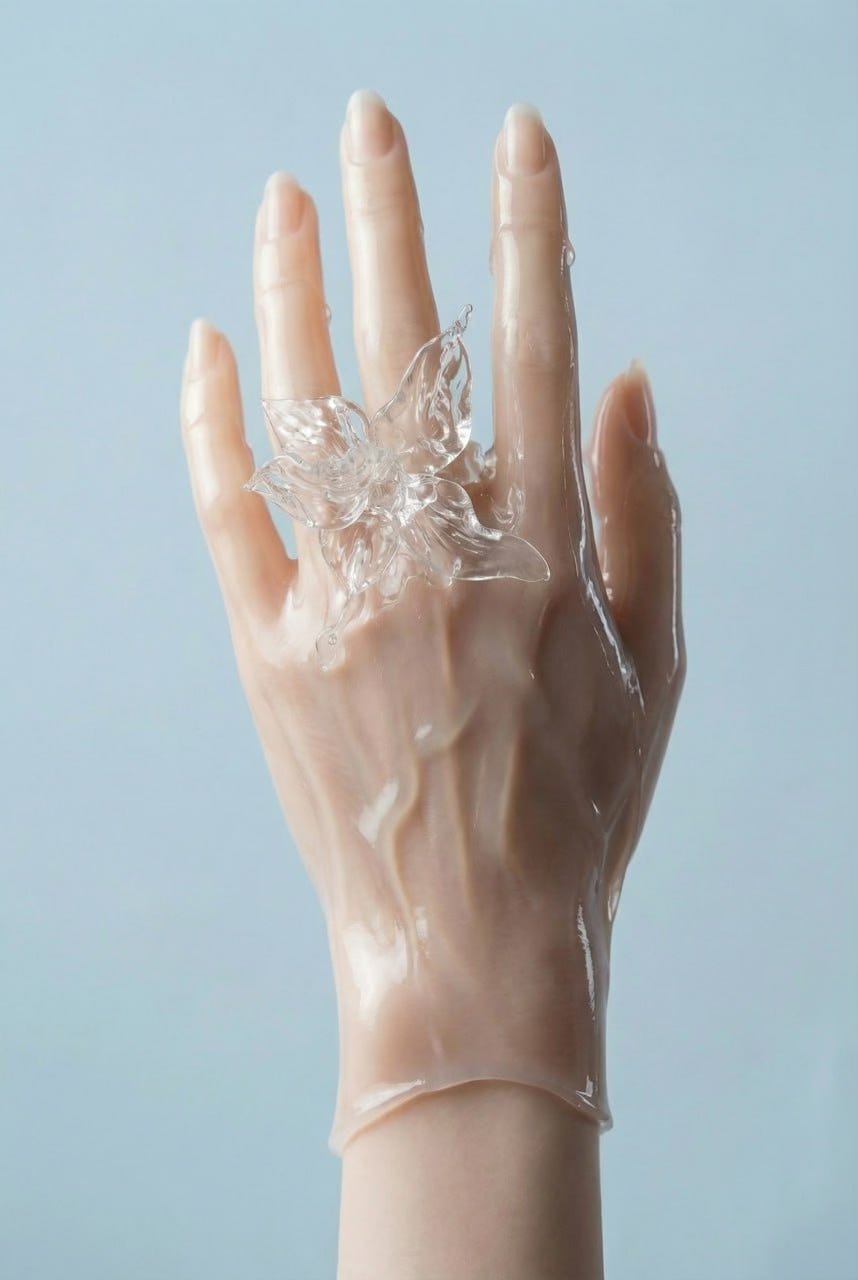
Anna began working with Alexandra Gapanovich while still a photographer. Both are from Murmansk, in the Far North, and for years Anna photographed Sasha’s campaigns and lookbooks. When she later began experimenting with glass, she showed Alexandra a small series of early pieces.
In that moment, the experiment drew Anna into fashion.
— I brought my small boxes and said, “Look at what I’ve been doing.” Sasha showed them to her stylist, who shapes the conceptual direction of her collections, and she immediately said, “Take everything.”
They had been looking for jewellery designers whose work came closer to art objects than to conventional jewellery, but had struggled to find anyone working in that way. The jewellery became part of Tsar-Devitsa (Tsarina Maiden), a collection inspired by Pushkin’s fairy tale and presented at Moscow Fashion Week.
In an experiment, what’s more important to you: the risk of making a mistake, or the freedom of not knowing where you’ll end up?
— I don’t really like mistakes. I’m actually afraid of them. The risk of making a mistake pushes me to think through every detail carefully.
When Anna enters a new field, her instinct is to understand it as fully as she can.
— That’s why I studied a range of glasswork techniques — and types of glass — without knowing whether I would need them later. And that is precisely what made experimentation possible. When I began developing jewellery for Sasha Gapanovich’s Eudialyte collection from scratch — for all 35 looks — I already had certain skills, including some I hadn’t even used before. I thought: “Wait, I do know how to do this. I’ve even bought the materials for it already.”
— Many people hesitate to learn something without knowing whether they will use it. But with every new skill, a new need inevitably appears. I find that kind of readiness to be a great tool for an artist.
There are also practical realities. Working with glass in Murmansk often means working in a state of waiting. Certain types of glass can be difficult to obtain, deliveries can take time, tools are not always available.
— While I was working on the collection, I would occasionally run out of gas for the torch — and the gas cylinder can only be refilled on weekdays, before 5 p.m. So you end up literally running through the city with the cylinder, trying to refill it in time to continue working over the weekend.
For Anna, art emerges when a work feels necessary to its moment, when it feels impossible not to make it.
For you, is creating every day more like a first day or a last day?
— For me, it’s important that it feels like a first day. I always associate it with the beginning of a new collection, the beginning of an experiment. You take a breath — and with that breath everything else begins to emerge.
— A “last day” usually feels more like a deadline. You’re scrambling to finish the final pieces, pack them, send them off to a show. On the same day!
— If we’re talking about a “last day” in an existential sense, then I probably wouldn’t do anything at all. I would simply go out into nature — lie down in the grass. Or in the snow.
Is there a moment when the work stops moving towards art?
— You can create objects that serve a purpose, repeat them, produce them, sell them. But when the work becomes primarily about repetition, it begins to belong more to craft.
— What matters for me is whether a piece contains my own statement. When that is present, then for me it becomes art.
From the beginning, she resisted the idea that her work might become a brand.
— I would say to a friend who came to my studio, filmed videos and posted them on Instagram: “I’m not going to start a brand. I’m not going to sell jewellery. I’m an artist. I want to create art.” Meanwhile he was posting the videos, with captions like “Look at the jewellery Anya is making!”
At a certain point, however, the demand for her work had already fully formed: she was creating a new jewellery collection for Sasha Gapanovich — and it would be shown at a specific place and time.
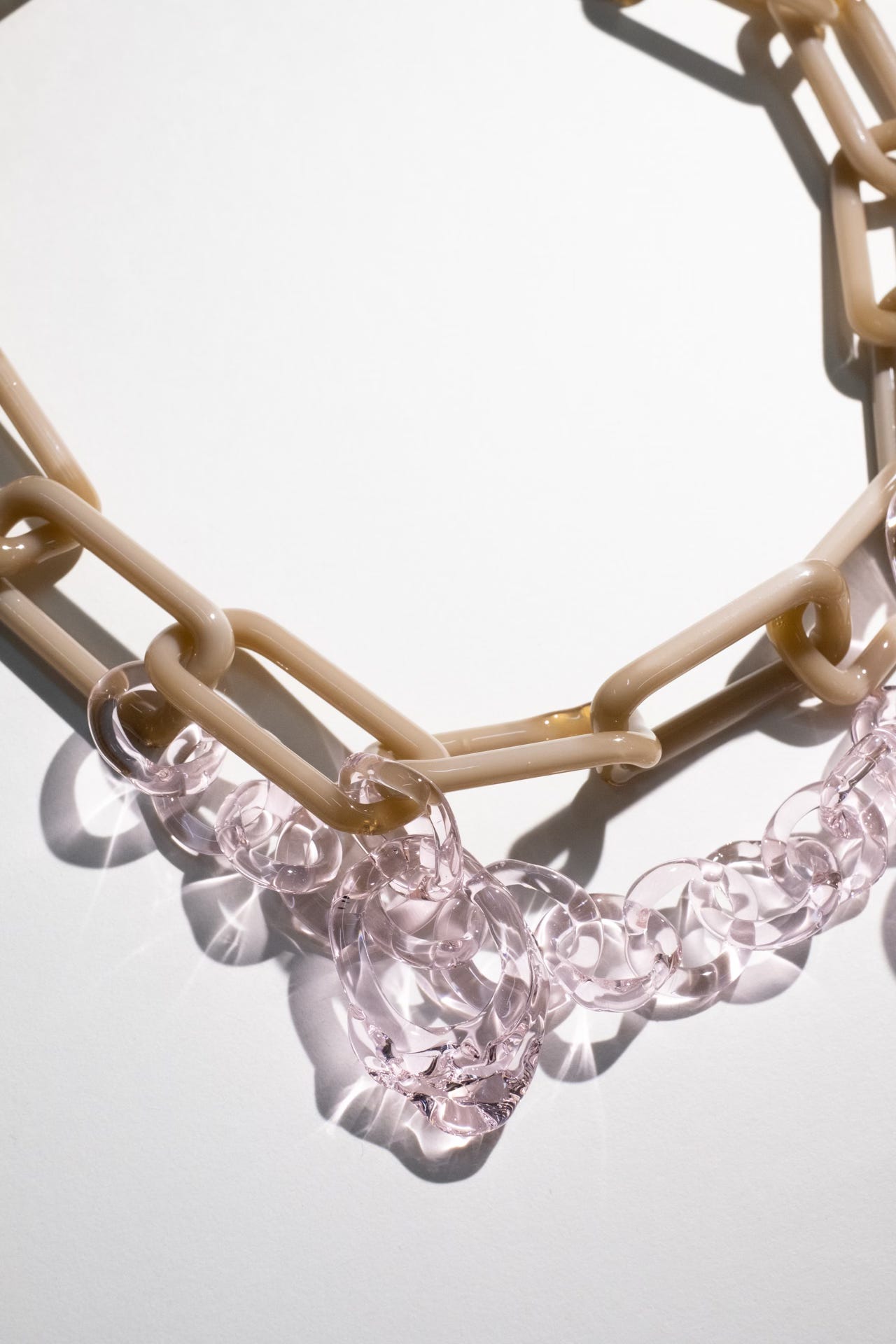
For Anna, art also depends on the moment in which a statement enters the world. If something remains stored in a studio, the work has not yet fully taken place. It does when it appears in an exhibition, at an art fair — or on the runway.
— It is very important for me to remain in that space. I would lose interest if I moved solely to craft.
Alongside jewellery, Anna Priakhina works with sound, live coding, and circuit bending.
Her practice moves between art and technology, exploring how technological systems might bring human beings into new relation with the natural world.
She recalls an installation by sound artist Roman Golovko that left a strong impression on her: a room filled with suspended tree trunks that began to vibrate when embraced. The work invited visitors to touch and feel a response. She spent a long time in that room. She returned to the exhibition more than once. It has stayed with her ever since, perhaps because it suggested a way technology might bring us closer to something living — to nature.
What do jewellery pieces allow you to express that cannot be conveyed through sound or technology?
— Sound and code are transient. Jewellery remains with a person, becomes part of their daily environment. It is also a form of wearable art. When a person wears a piece, that relationship begins to take shape — they connect with it, and with something I’ve placed within it.
— The wearer complements the piece and my statement with their own message, their own perspective. Their appearance becomes a reflection of what they wish to express outwardly.
— In a sense, people themselves become a kind of medium for my art. Through them, the work enters the world.
— So when a piece of jewellery comes to you, your energy meets what’s already in it. In that moment, you and I create something new together.
Before any piece could enter the world, Anna had to learn to let go of them. At the beginning, she didn’t want to part with anything at all.
— If I feel that a piece is ‘mine’, I keep it and make another one.
How do you know it’s ‘yours’?
— It’s an inner feeling that I want this exact piece and not a duplicate. Goosebumps, a sense of wonder, those small involuntary gasps of excitement. When you create a repeat, it becomes something else entirely. Your attention shifts — instead of creating, you’re focused on reproducing.
— But in that first moment, you assemble through feeling, sensing how it comes together. You don’t yet know what it will look like in the end — you only have a rough idea, and you build it intuitively.
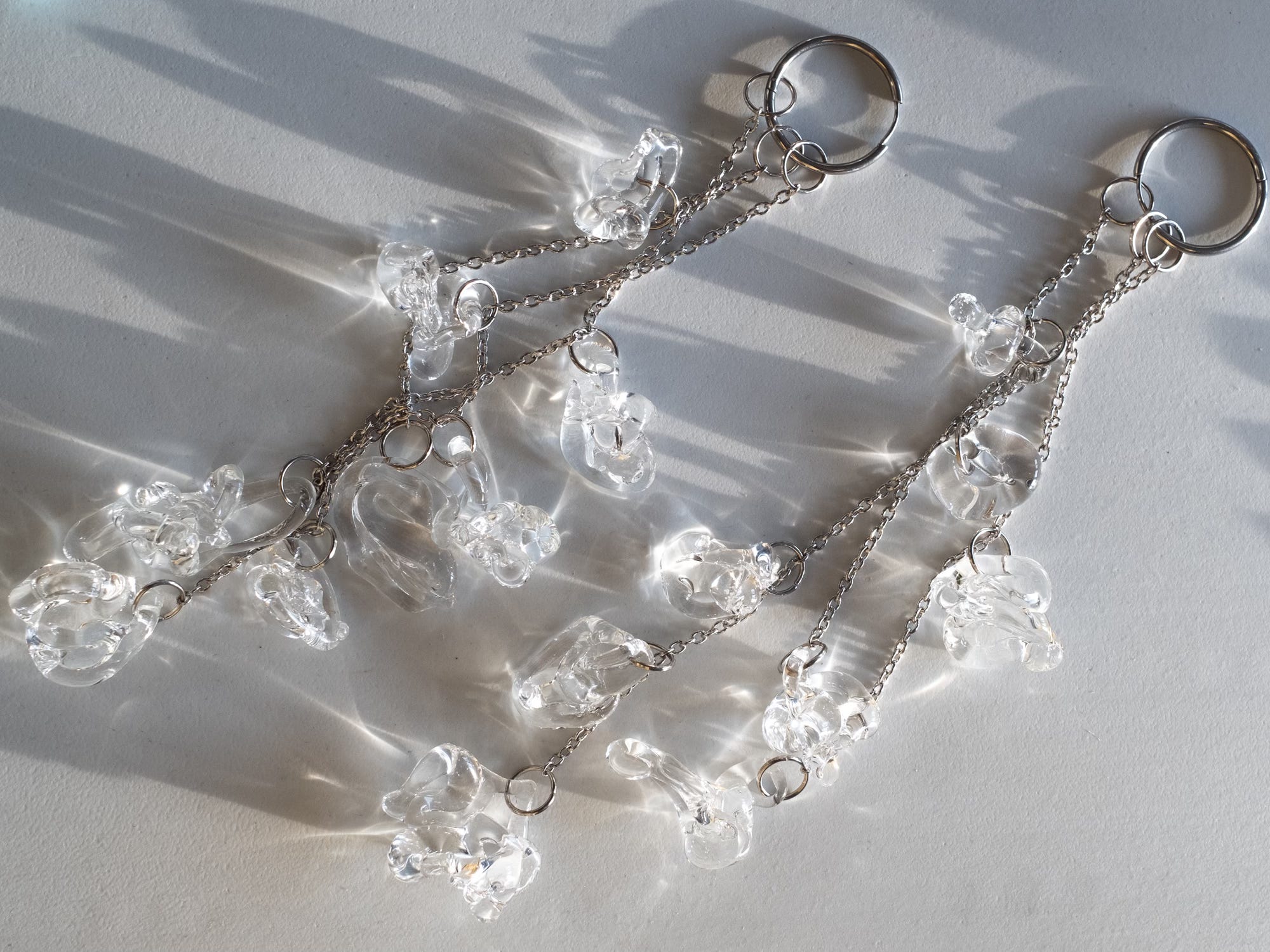
She had this with a piece called Tentacles. A powerful object in blown glass. When she completed it, her immediate reaction was, “My God, this is mine.” But Anna had to send it for the Eudialyte show. Later she asked for it back. She’d make another one, if necessary. But that particular piece remains hers.
— I’ve noticed that the objects I create as if for myself are often the ones that resonate most with others. For example, I might send rings out for a shoot and think, “They’ll come back — I’ll wear them.”
But sometimes they don’t. Stylists or models end up buying them on the spot.
Looking at your jewellery, especially the pieces you created for Alexandra Gapanovich — whose work is deeply connected to Murmansk and the Far North1 — I sense a kind of elemental rawness, a certain natural strength.
— Yes, I feel very aligned with Sasha in relation to the North and to nature. The North captivates me. Even though I was born and lived half of my life in the South, I feel very comfortable here.
— The North gives off a great deal of energy, perhaps because here we remain closer to what feels untouched. People remain along the shore, and beyond that begins the North Pole.
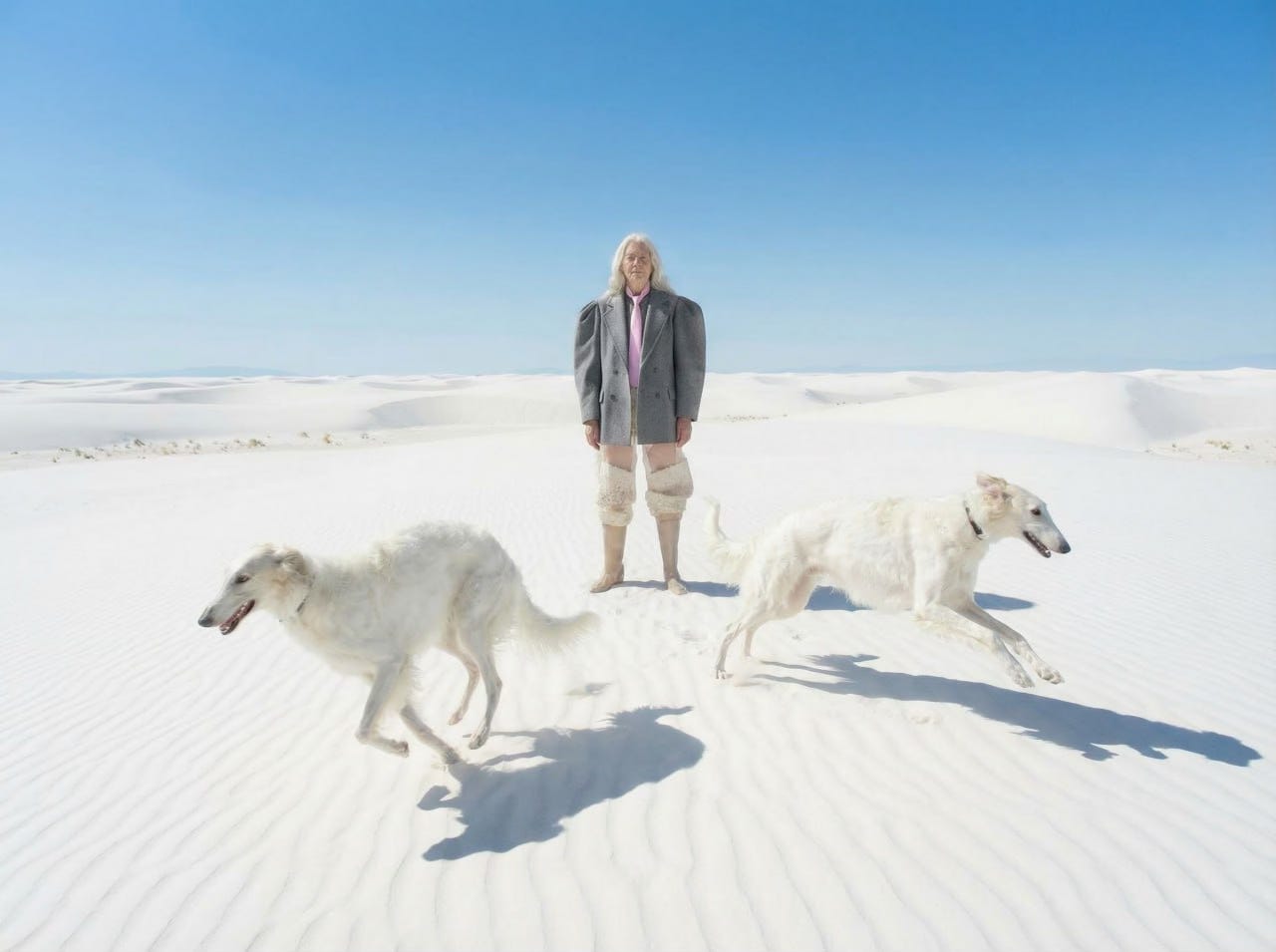
Anna didn’t consciously try to embed the idea of nature into her jewellery. Rather than assigning fixed meanings, she prefers to observe how people meet the work.
— Someone might take a piece and say, “There is nature in this.” And it’s not a literal reference — even in something as minimal as a ring with a sphere, people still perceive something of nature.
Why glass?
— At one point I simply felt that I needed to work with glass. People asked me, “Why?” And I would say, “I don’t know — but I need it. I don’t know what will come of it.”
— Glass has a remarkable quality: unlike stones, it does not seem to retain energy. Pure, transparent glass feels light and open. It allows things to pass through it.
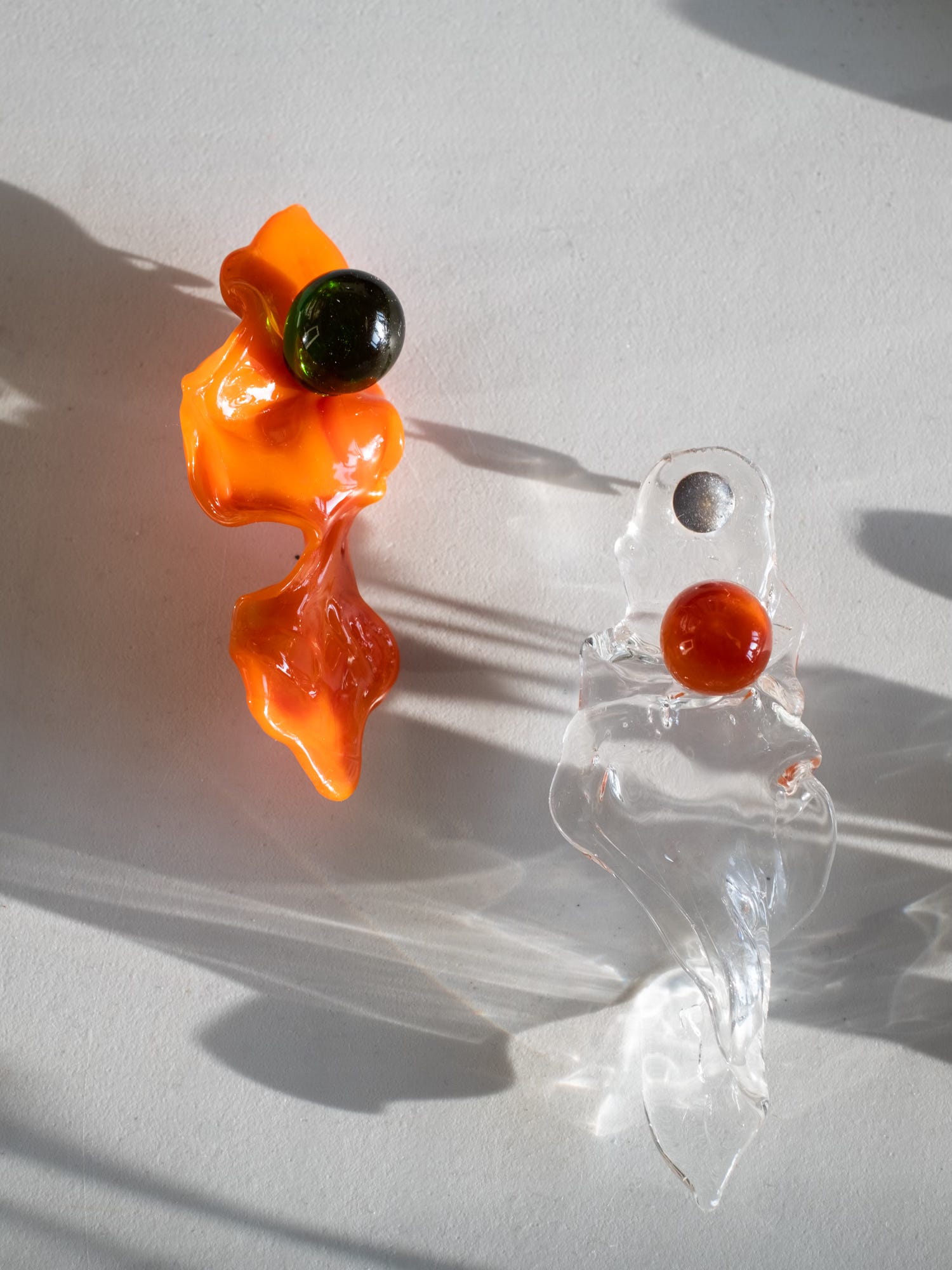
— I feel very drawn to this quality — it creates a sense of lightness, even a sense of goodness.
Sometimes the torch stays on for over an hour. The studio is quiet. Suddenly, the sound of a crack. Another one. “No… what’s happening? Please don’t explode!”
Glass crackles, and that sound brings a whole range of feelings — anxiety, excitement, sometimes fear. A small crack means a fracture has appeared somewhere inside the piece. She has to find it.
There’s a kind of mental readiness when approaching glass. A moment of saying to herself, “Alright, let’s go.”
If the air is too cold, it can undo almost everything she’s been working on. When hot glass cools unevenly, internal tension builds. And suddenly a large piece she’s been assembling for an hour can crack or lose an element.
In moments like that Anna sighs, and says, “Alright, I’ll go have some tea.”
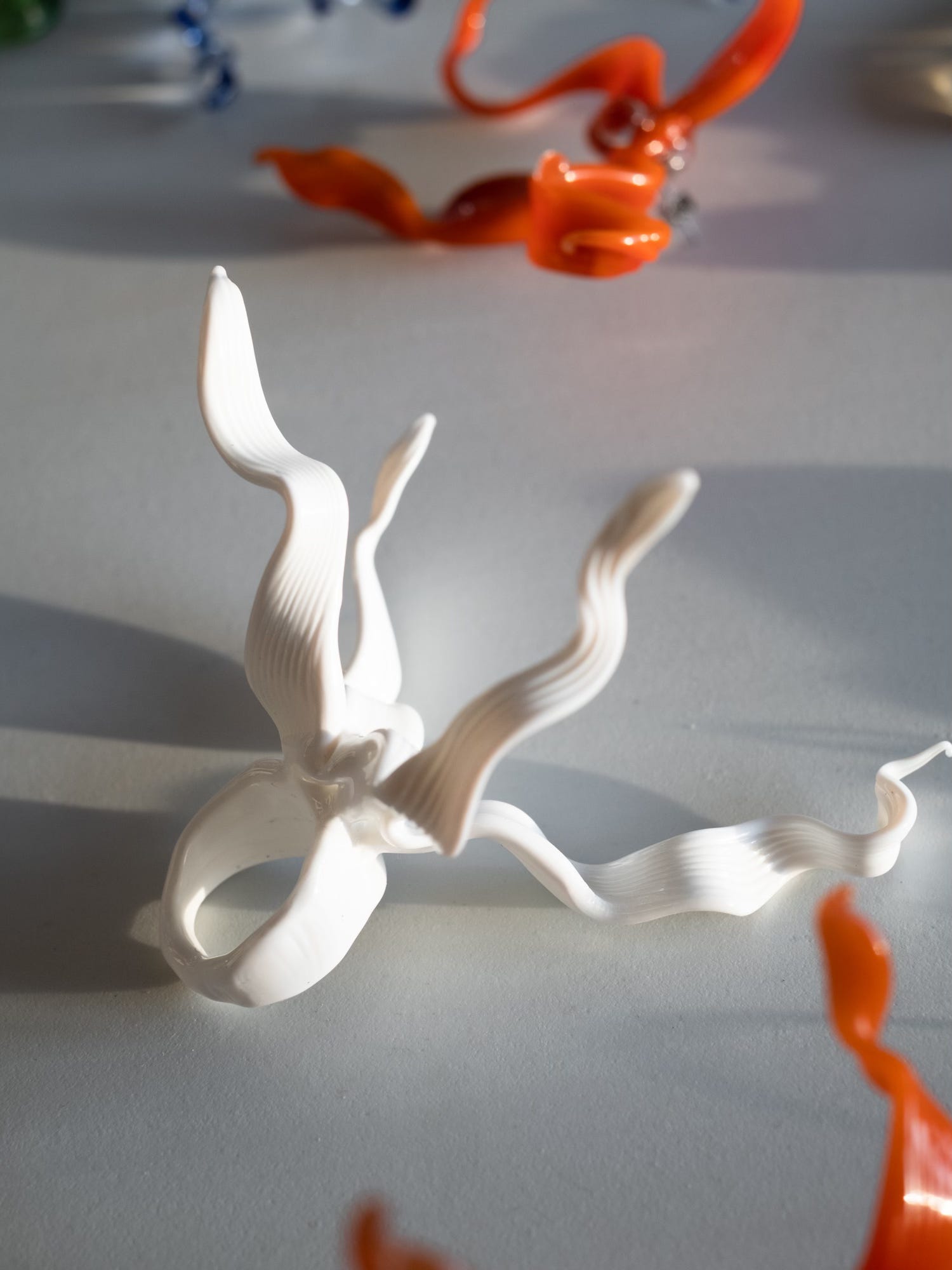
If you imagine the senses as instruments, which one would be easiest for you to part with: touch, smell, sight, or hearing?
— I think it would probably be easiest for me to part with smell. I’m a very visual person. I love beauty, and I try to make sure the space around me is beautiful as well. Sight is very important to me. But touch is also extremely important — the ability to touch things, to feel them physically.
— Although, of course, I’m not sure how I would drink my favourite tea without the sense of smell…
She takes a sip…
— No, I probably couldn’t give it up after all.
If you look closely at Anna’s glass, you’ll notice something else there: metal. It comes in at the assembling stage. Ready-made fittings — even gold or silver ones — just wouldn’t do it. They just don’t match.
— Beauty for me is not in perfect or standard forms, but in something new — something created specifically for that piece. That’s when I realized I wanted to learn metalwork as well. I wanted my collections to have not only unique glass elements, but also unique metal ones.
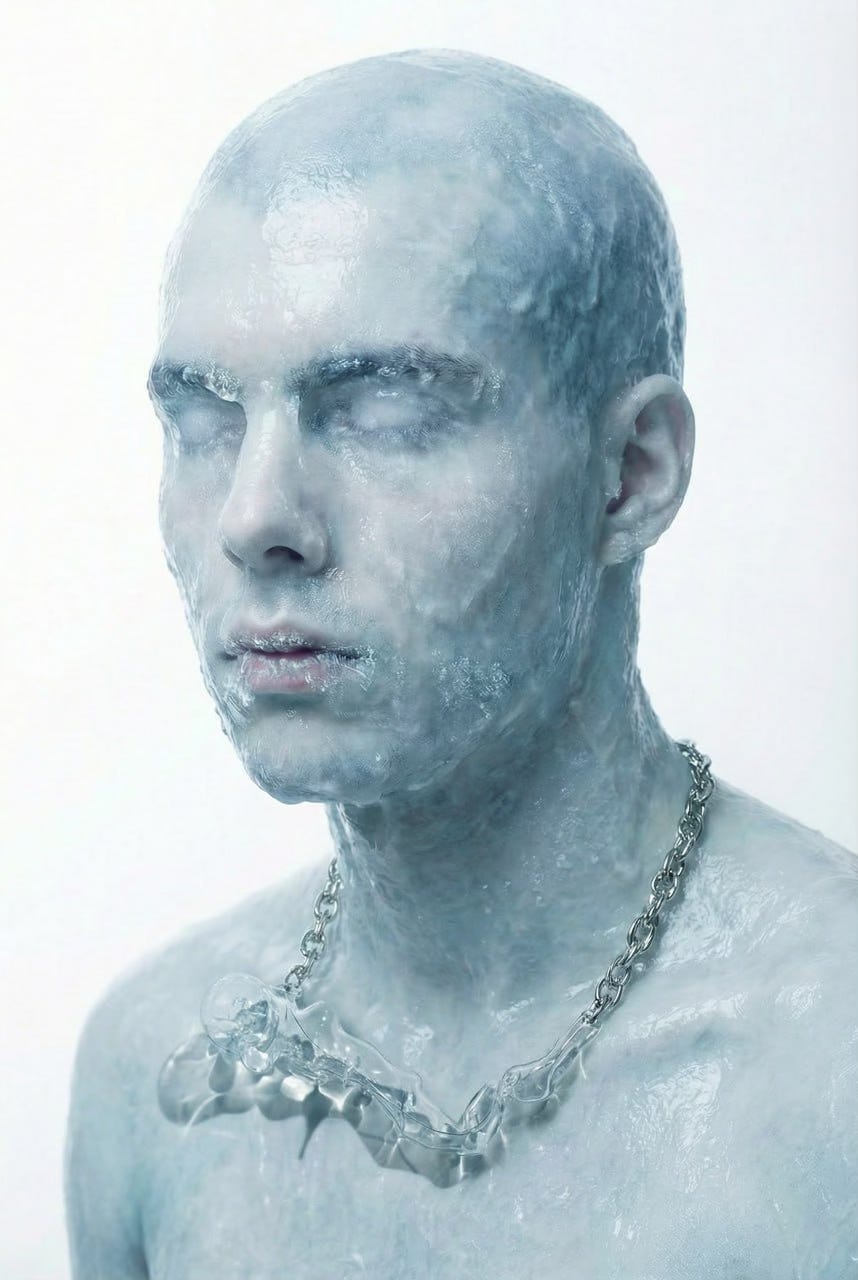
Working with glass and metal as both your mediums and materials, have there been decisions you later wanted to change?
— Quite often objects I make for the runway are truly experimental and remain purely runway pieces. In real life such heavy earrings, for example, simply wouldn’t be wearable.
— Runway pieces are similar to clothing: not everything shown on the runway is meant to be worn in everyday life. Some things are just meant to be part of the show itself, part of the statement.
— When we create a collection, I find it crucial that it is shown in its entirety during Fashion Week. Even if later, for sale, some pieces need to be adjusted in size or made lighter.
How do you come up with names for your jewellery pieces?
— In a way, I don’t really have names — I have sensations connected to the pieces. But in this world everything needs a name, so I end up with simple titles. Flower for a ring, or Berry Jam for a necklace. Or just numbers.
Anna Priakhina on beauty —
Beauty is an experience. When I see something: what do I feel? If I feel a sense of beauty, then for me it is beautiful. It is deeply connected to what we are used to seeing, to each person’s taste, to a personal relationship with what we encounter visually.
Ugliness, on the other hand, is not an experience for me. It’s a word people use — and I really dislike it — to describe a kind of mismatch: when a person or form doesn’t fit into what they consider normal or understandable.
But it is not an aesthetic impression. It is simply fear.
There was a period in my life that shaped how I think about this. I was three and a half when I spent some time in a hospital, the youngest child there.
The other children were up to fifteen years old, and many of them had different physical conditions or visible differences. The doctors were helping them through surgeries.
For me they were all beautiful because I didn’t think of them as different. We read the same fairy tales, spent time together, and played. The word ugliness didn’t even exist for me then.
It still doesn’t.
It’s in her nature, Anna says, to try new things and then keep moving forward. But not this time. This time she wants to continue creating jewellery.
— I really love what happens between me and the world through these pieces.
Through these pieces, Anna Priakhina remains in contact with the world. And the world with her.
Interview and translation from Russian by Anna Sokha
All imagery courtesy of Anna Priakhina
Thank you for reading PEAR NOT BEAR. Spasibo!
See also: PEAR NOT BEAR conversation with fashion designer Alexandra Gapanovich
